
How to Add a Derma Product Line to Your Existing Pharma Distribution Without Disrupting Your Business
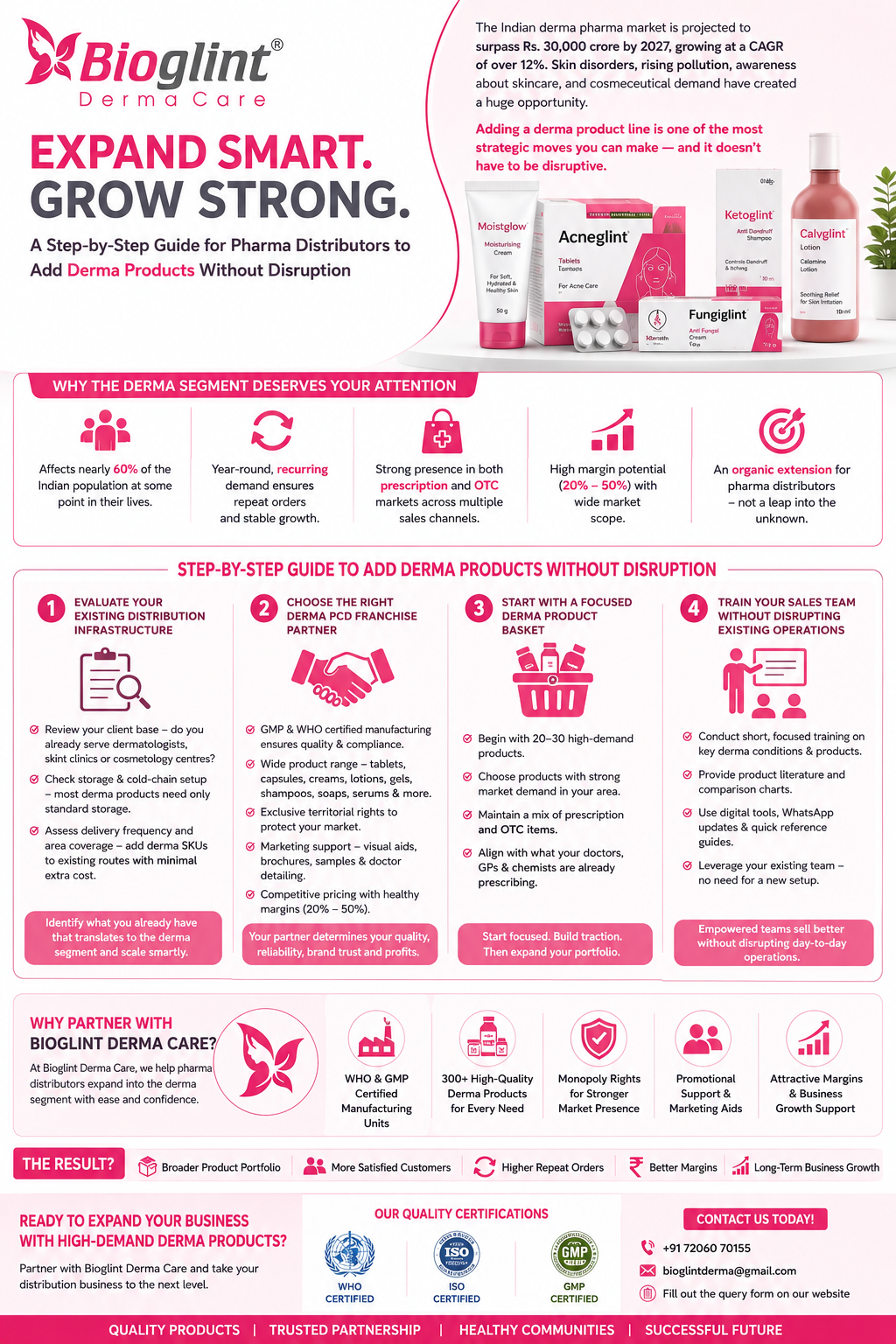
The Indian dermatology market is booming, and smart pharma distributors are taking notice. According to industry reports, the Indian derma pharma market is projected to surpass Rs. 30,000 crore by 2027, growing at a CAGR of over 12%. Skin disorders, rising pollution levels, growing awareness about skincare, and a surge in cosmeceutical demand have together created an unprecedented opportunity for pharma professionals. Yet, many existing distributors and franchise holders hesitate to expand into the derma segment, fearing operational disruption, inventory complexity, or market unfamiliarity.
The truth? Adding a derma product line to your pharma distribution business is one of the most strategic moves you can make right now, and it doesn’t have to be disruptive. With the right approach and the right derma PCD franchise partner, this transition can be smooth, profitable, and sustainable. This guide walks you through exactly how to do it.
Why the Derma Segment Deserves Your Attention
Before diving into the “how,” it’s worth understanding why dermatology products are such a compelling addition to any pharma portfolio.
Skin-related conditions, from acne and eczema to fungal infections and pigmentation, affect nearly 60% of the Indian population at some point in their lives. Unlike many therapeutic segments where demand is seasonal or condition-specific, derma products enjoy year-round, recurring demand. Patients need face washes, moisturising creams, anti-fungal ointments, shampoos, and sunscreen lotions consistently, making repeat orders highly reliable.
Furthermore, the derma category spans both prescription and over-the-counter (OTC) products, giving distributors multiple sales channels, from dermatology clinics and hospitals to general medical stores and beauty pharmacies. For a pharma distributor already serving medical representatives, chemists, or clinics, this is an organic extension, not a leap into the unknown.
Step 1: Evaluate Your Existing Distribution Infrastructure
The first step is a realistic audit of what you already have. Ask yourself:
Do your existing clients include dermatologists, skin clinics, or cosmetology centres? If yes, you already have the demand network in place. Adding derma products means fulfilling orders you might currently be missing out on.
What is your current storage and cold-chain setup? Most standard derma products, creams, lotions, gels, ointments, soaps, and shampoos do not require specialised cold storage. They can be stored alongside your existing pharma inventory with basic temperature and humidity controls.
What is your current delivery frequency and area coverage? If you are already covering a territory regularly, adding derma SKUs to existing routes involves minimal extra logistics cost. The goal at this stage is to identify what you already have that translates directly to the derma segment, so you scale smartly without rebuilding from scratch.
Step 2: Choose the Right Derma PCD Franchise Partner
This is the most critical decision in your entire expansion strategy. Not all derma companies are equal. Your partner will determine your product quality, supply reliability, brand reputation, and ultimately your profitability. When evaluating a derma PCD franchise company, look for:
GMP and WHO Certified Manufacturing – Products manufactured in certified units ensure quality compliance, fewer customer complaints, and regulatory safety. Companies like Bioglint Derma Care operate with GMP and WHO-certified pharma units, which means the products you distribute meet the highest quality benchmarks.
Wide and Comprehensive Product Range – A good derma partner should cover the full spectrum of tablets, capsules, creams, lotions, gels, ointments, face washes, soaps, shampoos, dusting powders, and serums. This breadth allows you to serve both prescription and cosmetic demand from a single source, simplifying procurement.
Exclusive Territorial Rights – The best derma franchise companies offer monopoly-based distribution rights, meaning you get exclusive rights to sell in your territory without internal competition from the same company. This directly protects your market and margins.
Promotional and Marketing Support – Look for partners that provide visual aids, product brochures, sample kits, and doctor detailing support. This reduces your marketing cost significantly when entering a new category.
Competitive Pricing and Healthy Margins – The derma segment can deliver margins between 20% to 50%, depending on product type and market positioning. Ensure your partner’s pricing supports healthy PTR (Price to Retailer) and PTS (Price to Stockist) structures.
Step 3: Start with a Focused Derma Product Basket
One common mistake new derma distributors make is trying to launch with a massive portfolio all at once. This creates inventory risk, confusion among your sales team, and difficulty in creating focused market awareness.
Products with strong existing demand in your territory (anti-fungal creams, moisturisers, medicated shampoos, acne gels) and a mix of prescription and OTC items to maximise your outlets. Focus on products that align with what your current client base of dermatologists, GPs, and chemists is already prescribing or recommending.
Once you establish initial traction with this focused range, you can gradually introduce newer formulations and specialised products without overwhelming your team or your customers.
Step 4: Train Your Sales Team Without Disrupting Existing Operations
Your sales and distribution staff are already trained for general pharma. Derma is a specialised segment with its own terminology, prescription behaviour, and customer expectations. However, bridging this gap doesn’t require a complete overhaul.
Conduct short, structured product training sessions covering the key derma conditions your products address, the differentiation of each product, and how to position them to dermatologists and skin care-focused GPs. Most reputable derma franchise companies, including Bioglint Derma Care, provide ready-made visual aids and product detailing kits that significantly reduce the learning curve for your team.
The key is to run derma operations in parallel with your existing distribution – not as a replacement. Assign dedicated attention to derma clients (skin clinics, cosmetic pharmacies) while your core business continues as usual.
Step 5: Build Doctor and Chemist Relationships in the Derma Space
Your existing pharma network may not overlap fully with dermatology professionals. Make a targeted effort to map and connect with dermatologists, cosmetologists, general physicians with skin-care focus, and speciality pharmacies in your area.
Offer product samples, arrange small-scale product presentations, and leverage any existing doctor relationships to get introductions. Word-of-mouth among medical professionals in a territory travels fast. One trusted dermatologist recommending your product brand can unlock dozens of chemist accounts organically.
Step 6: Monitor, Scale, and Optimise
Once you’ve launched your derma product line, track performance closely in the first three to six months. Monitor which products are moving fastest, which doctors are prescribing regularly, and which outlets are generating the best repeat orders.
Use this data to refine your inventory, focus your sales effort, and communicate feedback to your derma franchise partner for better product support. Scaling in derma is most effective when driven by demand signals from the ground rather than guesswork.
Final Words
Adding a derma product line to your existing pharma distribution business is not just an opportunity – in today’s market, it is a strategic necessity for long-term growth. The demand is consistent, the margins are healthy, and the operational overlap with your existing business is significant. The key is choosing the right derma PCD partner, starting focused, and scaling with data.
Bioglint Derma Care, a trusted name in the Indian derma pharmaceutical space, offers a comprehensive range of WHO-GMP certified dermatology products, exclusive monopoly franchise rights, and strong marketing support – making it an ideal partner for pharma distributors ready to grow into the derma segment without disruption.
Frequently Asked Questions (FAQs)
Can I add a derma product line without a separate drug licence?
If you already hold a valid pharmaceutical drug licence for distribution, it typically covers derma products as well; however, it’s advisable to verify with your local drug authority for OTC cosmeceutical products.
How much investment is required to start a derma PCD franchise?
The initial investment varies by company and range size, but most derma PCD franchises can be started with a modest inventory investment of Rs. 20,000 to Rs. 50,000, making it accessible even for small distributors.
Will adding derma products affect my existing pharma business operations?
No, if planned correctly. Derma distribution can run in parallel with your existing business using the same logistics infrastructure, with minimal additional overhead.
Do I need a separate sales team for the derma segment?
Not necessarily at the start. Your existing team can be trained to handle derma products with basic product knowledge sessions and the marketing materials provided by your franchise partner.
Why is the derma segment considered more profitable than general pharma distribution?
Derma products – especially branded creams, serums, and speciality cosmeceuticals – carry higher margins compared to generic pharma, and the recurring nature of skin care purchases ensures consistent repeat orders throughout the year.
